A trip to the grocery store or a walk through a parking lot shouldn’t end in the emergency room. However, slip and fall accidents are surprisingly common and can lead to severe, life-altering injuries. While many people brush these incidents off as mere clumsiness, the reality is that property owners have a legal duty to keep their premises safe for visitors.
At Wayne Hardee Law, we know that these accidents often result in more than just physical pain; they bring medical bills, lost wages, and frustration. If you are wondering whether you have a valid claim, you are not alone. Below, we answer the most critical questions about proving liability in a slip and fall case.
What is required to win a slip and fall case?
To win a slip and fall claim—legally known as a premises liability case—you must prove that the property owner was negligent. It is not enough to simply show that you fell and got hurt.
Generally, you must prove the following four elements:
- Duty of Care: The owner owed you a duty to keep the area safe (e.g., you were a customer, not a trespasser).
- Breach of Duty: The owner knew, or should have known, about the dangerous condition and failed to fix it.
- Causation: The dangerous condition directly caused your fall.
- Damages: You suffered actual injuries and financial losses as a result.

What does “Constructive Notice” mean?
This is often the most difficult part of the case to prove. “Constructive notice” means that the hazard existed long enough that the property owner reasonable should have discovered it and cleaned it up.
For example, if a jar of pickles shatters in a grocery store aisle and you slip on it ten seconds later, the store likely isn’t liable because they didn’t have time to react. However, if that pickle juice sits there for an hour while employees walk past it, they have “constructive notice” and can be held liable for your injuries.
What kind of evidence do I need to gather?
Evidence is the backbone of your claim. Because spillages can be cleaned up and ice can melt, it is vital to capture evidence immediately after the accident happens.
To build a strong case, try to secure:
- Photos and Video: Take pictures of the hazard (the puddle, the loose carpet, the ice) and the surrounding area.
- Witness Details: Get names and phone numbers of anyone who saw the fall.
- Incident Reports: Notify the manager immediately and ensure a report is filed. Ask for a copy.
- Clothing/Shoes: Keep the shoes and clothes you were wearing unwashed, as they may contain residue of the substance you slipped on.
For more statistics on the severity of falls and why documentation is vital, the National Safety Council (NSC) provides extensive data on how these preventable accidents impact thousands of Americans annually.
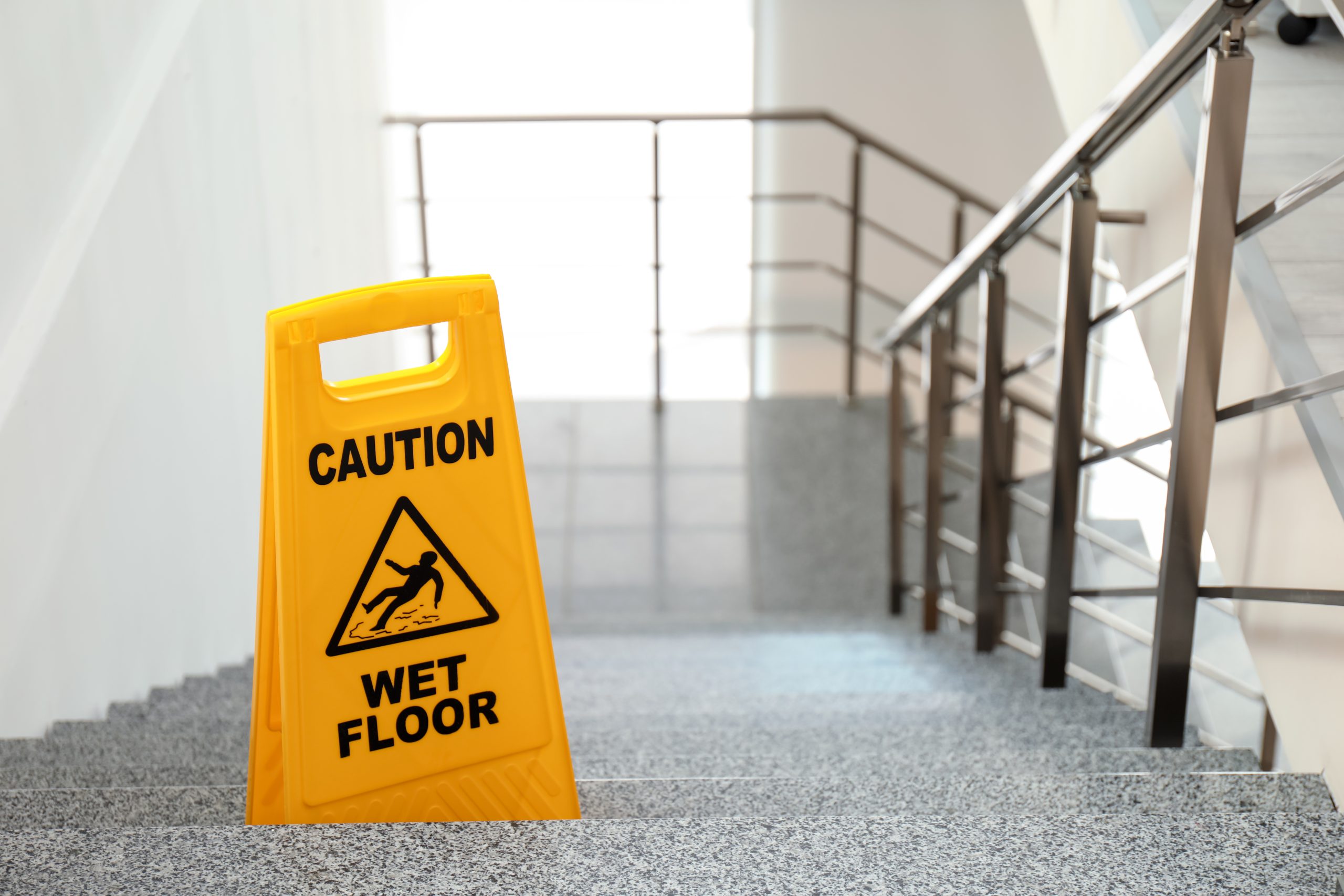
What if there was a “Wet Floor” sign?
If a “Wet Floor” sign was clearly visible and you slipped anyway, it becomes much harder to prove the owner was negligent. The sign serves as a warning, fulfilling part of their duty of care.
However, a sign does not automatically ruin your case. If the sign was hidden, knocked over, or placed in an area that did not actually cover the hazard, you may still have a claim. Additionally, if the hazard was unavoidable—meaning you had no other path to take to leave the building—the owner might still be liable.
Does North Carolina’s “Contributory Negligence” law affect me?
Yes, and this is why you need an attorney. North Carolina is one of the few states that follows the strict rule of Contributory Negligence.
Under this rule, if the insurance company can prove you were even 1% at fault for your own fall (for example, you were texting while walking or looking at a shelf instead of the floor), you may be barred from recovering any compensation. Insurance adjusters know this law well and will try to trick you into admitting you weren’t paying attention.
How can a lawyer help me?
Because the burden of proof is on the victim, and because North Carolina laws are so strict regarding fault, handling these cases alone is risky.
An experienced lawyer can subpoena security camera footage before it is erased, interview witnesses, and look into the property’s history of safety violations. We act as a shield between you and the insurance adjusters, protecting your rights so you can focus on healing.
Let Us Review Your Case
If you have been injured on someone else’s property, do not assume it was your fault. Contact Wayne Hardee Law today. We will review the facts of your accident and help you determine the best path forward to secure the compensation you need.